
Written by Thomas Mutsimba, an Enterprise Risk Management Professional, with specialist endowment in advanced actuarial analysis and advanced forensic analysis©
Visit ThomasActuarialanalysisworld Blog for more cutting edge insights @ https://actuarialanalysisworld.finance.blog/
Object orientation is a measurement of program design sector linkage movement dynamics. The centre of object orientation is the link topography of script run time quotient formation dynamic centrage. For every program is made up of object sensitization sectors. In this publication, I address object orientation strategies using extrapolation depiction of channel sequestration of program code sector breakage positioning. This position moves at actuarial forensics zooming indexing set at denture partition array formation.
Set at denture partition array formation is the gap input and output motion bits oriented at measurement basis of actuarial semantics. What does this mean? This means the velocity of object run time variables is a factor serialization sequestration that must be set using object orientation architecture of desensitization dynamics. Actuarial forensics, a wholesome skill lagging today in enterprise risk architecture design is required a great deal in todays’ business information systems and architecture. There are five points I will elucidate in the design juncture formatives of actuarial forensics object orientation strategies.
Because organisations today engage in programming initiatives built on information technology architecture and systems built run time analytics. The formation of these systems run time analytics in quotient mechanisms is the underlying risk diametrical futuristic universe. In this publication I showcase an unconventional methodology design of measurement bases using the actuarial forensic dimension. This publication is not an academic articulation, but it is based on innovation from a dimension of revelationary analytics. What are revelationary analytics? This refers to discoveries innovation of unconventional actuarial formation of object orientation strategies extrapolation.
There are five measurement quotient inputs volume metrics biotics. These are object orientation strategies extrapolation variants utilized to quotient set the dynamics of object linking optics. Programming and enterprise risk architecture are nano-measured at optical zooming not seen in today’s inefficient and ineffective design formation measurements.
Due to a rapid lag in development of actuarial design of industrial application of mathematical techniques, most entities lag in object orientation performance measurement techniques. The five measurement quotient inputs are:
- The Centre of object performance objectives.
- Quantum variables of script run time movement architecture.
- Object orientation extrapolation sense technicalization.
- Extrapolation techniques using standard deviationary tactical plan.
- Input division partition of denture array.
The Commencement of object performance measurement objectives
This is the planning of the program code linkage formation. This object performance measurement is the centre of programming analyticals. Set at the concomitant asynchronous volume metrics usurped at the topographical linkage analytics, objects are program points convolutes that drive the script run time analytics. In the motion record cards, planning program objects are linked to script sensitization points. Dura partitioning a program code linkage sets the formulatory actuarial object performance. What does it mean? It means the program code is actuarially formatted into object compartment sets.
Furthermore, the linkage of object performance is a strategic actuarial technique. Today’s enterprise assurance datum levels are strategic quality measurement bases. Using an actuarial basis of measurement one needs a formative component object performance measurement. Thus, during programming or building of object blocks, scripting technicians or architects work with object skeptics. Because entities seldom have scripting optics analytics, programming interfaces are not forensically analyzed to optimize the orientation of object performance. Consequently many organizations do not publish objects performance metrics of this nature.
Using performance measurement quadrants, the object direction movement dynamics are set or built in the four quadrants of object performance measurement. The four quadrants I refer to are:
- Quadrant 1: Object input proportion quotient.
- Quadrant 2: Object efficiency throughput syndrome.
- Quadrant 3: The Indicator quadrant of throughput motion volume metrics.
- Quadrant 4: Reporting adages of object actuarial performance measurement opinion.
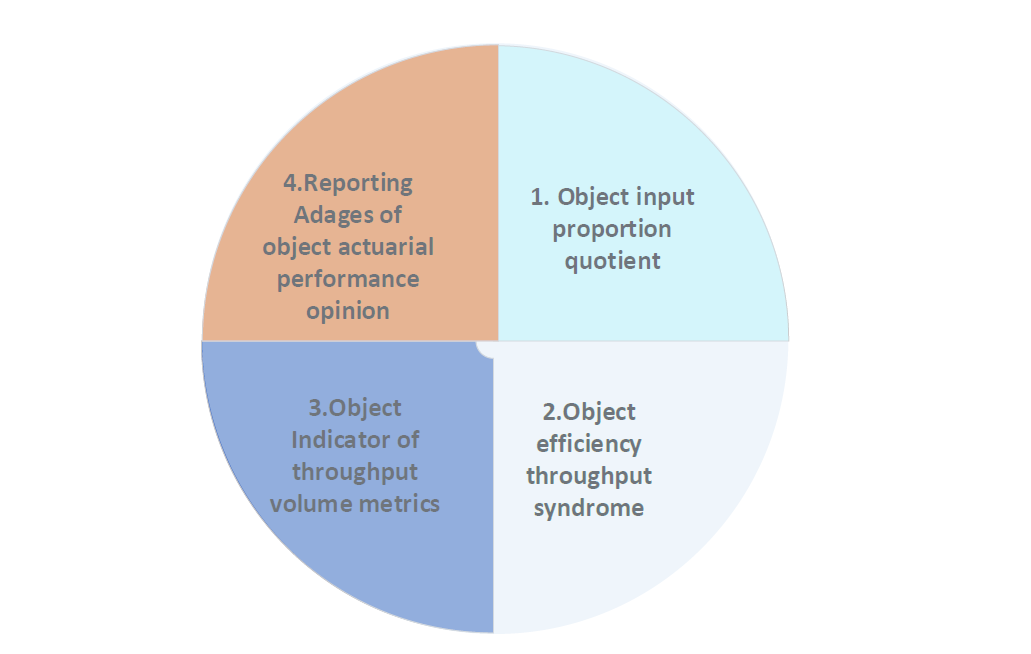
Figure 1: Four quadrants of Object performance measurement. Designed by Thomas Mutsimba at The Actuarial Forensics Leadership Centre
One may ask why the aforesaid quandrants are four in number. This cycle of four quadrants is built on a measured 360 degree view formatting of decentralized quality traits observed when objects move. Objects move at the centrage of information security assertions built in object positioning and the asynchronous output linked objects. These quality traits may be proven at the projected object of object performance. In this publication focus is targeted highly on the focus of object performance measurement. Object performance measurement detail on its formation is an issue that can be expounded more in another publication to come.
Quantum Variables of Script run time movement architecture
Quantum variables of script run time are relational volume metrics of object performance. Nurtured at the input throughput programming design, there are quantum variables of script run time movement architecture. How does object performance feature at program code design patio? It is not at program code design patio per se, but it is at the bay of object performance instructions usurping capabilities stature. The visual narrative built in object performance concomitantly directs the output needed to bring variability in output metrics. What does it mean for the actuarial measurement basis? It means that object performance strategy extrapolation is a built run time quotient that is not measured by most organizations.
Organisations in development technologies lag in script run time analytics development. Why is that so? I assert that it is so because of the notion that automation and or development of utilities for object extrapolation is a serial partition quotient variability that adds no value to development projects timeline deliverables. Sieving or narrowing of project deliverable indicators in development projects stalls the operations-governance assurance quotient. Actuarial techniques of the higher order integration of enterprise risk assurance into governance methodologies are required. Script run time movement variables are built on five structural degenerators of the quantum. These degenerators are:
- Quantum script motion metrics.
- Actuarial measurement base simplified at phase analysis to inform enterprise assurance.
- Line of defence integration at combined assurance view.
- Quantum variability factor movement.
- Technicalization of script run time variables.
Object Orientation Extrapolation sense technicalization
Objects in programming are formed at debasing ajuncture analytical postures of automation.What does this mean? This means that object orientation extrapolation is a sensory structure that can be extrapolated without scenario planning.
Scenario planning is a principle that is used in enterprise risk vacillation methodologies posturing conditional variabilities as a result of input-output quotient analytical postures. Variations in scenario planning are conditions and or events that technicalize the object automation perception measurables. In the development phase of projects, the roping in of an Actuarial Analyst serves to introduce extrapolation techniques for coverage of scenarios in object orientation extrapolation technicalization. This method is a linking characteristic of object orientation based on functional business requirements.
The technicalization quotient which is part of the object orientation extrapolation is a method from automation fundamentals. This method cannot be disassociated from orientation extrapolation variables spelt out in scenario planning. What does this mean for an Actuarial Analyst? The Actuarial Analyst comes in with a cocktail of assurance measures pinned on extrapolation pinned fundamentals. The aforesaid fundamentals are the technicalization of object orientation measurement inputs, object run time linkage efficiency, the variability input quotient, measurements target variants among other requirements of projects object orientation.
Extrapolation Techniques using standard deviation tactical plan
There are various methods that are used in object orientation extrapolation. Extrapolation is replicative on variant modes of object orientation extrapolation techniques. Using actuarial time series analysis, development of extrapolation makes use of scenarios to gauge the most critical or optimal performance. Using performance subjective analysis, extrapolation techniques in object orientation move to show the ajuncture indecipherable analytics. These ajuncture indecipherable analytics form the basis of deviations from the standard together with the subject matter.
Demonstration of object orientation extrapolation requires programming interface dumbs that are available. One may simulate extrapolation of business requirements espoused in program objects. It is imperative for an Actuarial Analyst to determine the techniques available for the nature of the industry within which the entity operates.
Sequestration, the separation methodologies
Sequestration is an actuarial formation technique that allows compartment sensory analysis. What is its use in extrapolation techniques? Its use in extrapolation techniques is used to break big data object ridden environment. In huge enterprises hosting multi-objects linkages, it serves to use object performance measurement indexes. The object performance measurement indexes use extrapolation techniques. Object orientation simulation dumbs are linked using utilities to test the ideal extrapolation. The ideal extrapolation moves in tandem with business requirements analysis.
Input Division partition of denture array
The Input division partition of denture array refers to the operation of sequestrated compartments of the breakage in object orientation extrapolation. The object orientation extrapolation is a combination of input variables compartmentalized per quotient set for each compartment of extrapolation methodology. Using the jargonized techniques in programming formats of development projects, an enterprise view is or can be formed at the fibrous structural information security modeling utilities. Most entities or organizations do not generate these views; the input division partition of denture array. Why is that so? It is so because of the change management drive. Deficiencies are found in project management techniques of process management and engineering.
Engineering Methods
What is this in light of input division partition? This refers to the process engineering of object orientation extrapolation. Engineering methods serve as value analysis sequestration technique. Value of project object orientation extrapolation is gentrified using orientation extrapolation efficiencies identification. Using enterprise governance of information security modeling, object orientation is critical to business functionality integration into the project transformation strategy. Having said this, actuarial techniques move in tandem with the extrapolation techniques quantum utilities.
Programming and Scripting utilities move the sensored dentures whose object orientation asynchronously creates scenario planning pinned variables. Where an Actuarial Analyst is consulted for such a process, object orientation extrapolation uses the following techniques in planning review analyticals of project object orientation extrapolation:
- Sensory linkages variability instrumentation.
- Review analysis of extrapolation quotients.
- Objects population distribution in enterprise architecture.
- Programming formatting at command line diction path directory extrication.
- Release notes identifiers of object orientation objective extrapolation.
- Revision analytics using quantum formulation methodologies of object orientation extrapolation.
This method aforesaid or explained in summary in this publication is information security modeling centered. It is centered on information security modeling fundamentals because of ajuncture indecipherable analytics that must be carried out. However, these ajuncture indecipherable analytics are hidden in object orientation fundamentals usurped as one model of information security. This publication is accompanied by forthcoming series of publications that bring out the modeling architect’s view.
Disclaimer: All views expressed in this article are my own and do not represent the opinion of an entity whatsoever, with which I have been, am now, or will be affiliated with. ©
 informationsecactuarialyardanalysis